
Kia hono mai ki te kaupapa
— Discover what’s happening across our Rangahau kaupapa.
He Pānui Rangahau | June 2026
Te Haa o Ako - Book Launch 7th July, Raroera
The highly anticipated Te Haa o Ako pukapuka will be officially launched on July 7th at our Raroera campus, marking a significant milestone for our ako whānau across Te Wānanga o Aotearoa. This special publication brings together a collection of powerful narratives that reflect the lived experiences, insights, and aspirations of our ako practitioners.
Te Haa o Ako honours the unique journeys of our kaiako and kaimahi as they navigate, deepen, and express their understanding of identity, practice, and impact within their mahi. It shines a light on the Indigenous pedagogies that underpin our approach to ako — frameworks grounded in mātauranga Māori that guide how we teach, learn, and connect with one another. These stories demonstrate that ako is not simply a method, but a living, evolving practice shaped by whakapapa, relationships, and shared purpose.
At Te Wānanga o Aotearoa, our work is more than just a job. It is a commitment to nurturing the potential of our learners, uplifting whānau, and contributing to the wellbeing of our communities. The narratives within this pukapuka reflect that calling, revealing the courage, creativity, and care our kaimahi bring to their roles every day. They speak to the importance of wairua, of holding space for growth, and of fostering environments where our tauira can thrive as Māori and as global citizens.
Through these shared experiences, Te Haa o Ako illustrates the transformative power of education that is grounded in tikanga and driven by aroha. It acknowledges the challenges faced along the way, while celebrating the resilience and innovation that define our people. Each kōrero is a reminder that our collective strength lies in our ability to learn from one another, to adapt, and to remain anchored in who we are.
As we prepare for this launch, we encourage all kaimahi to engage with these stories, reflect on their own journeys, and consider how they carry Te Haa o Ako forward in their daily practice. May this pukapuka inspire, challenge, and affirm us all to continue strengthening our impact across our rohe and beyond.
Let us come together to celebrate this kaupapa and the voices that bring it to life.
Indigenous Plant Fibres Symposium
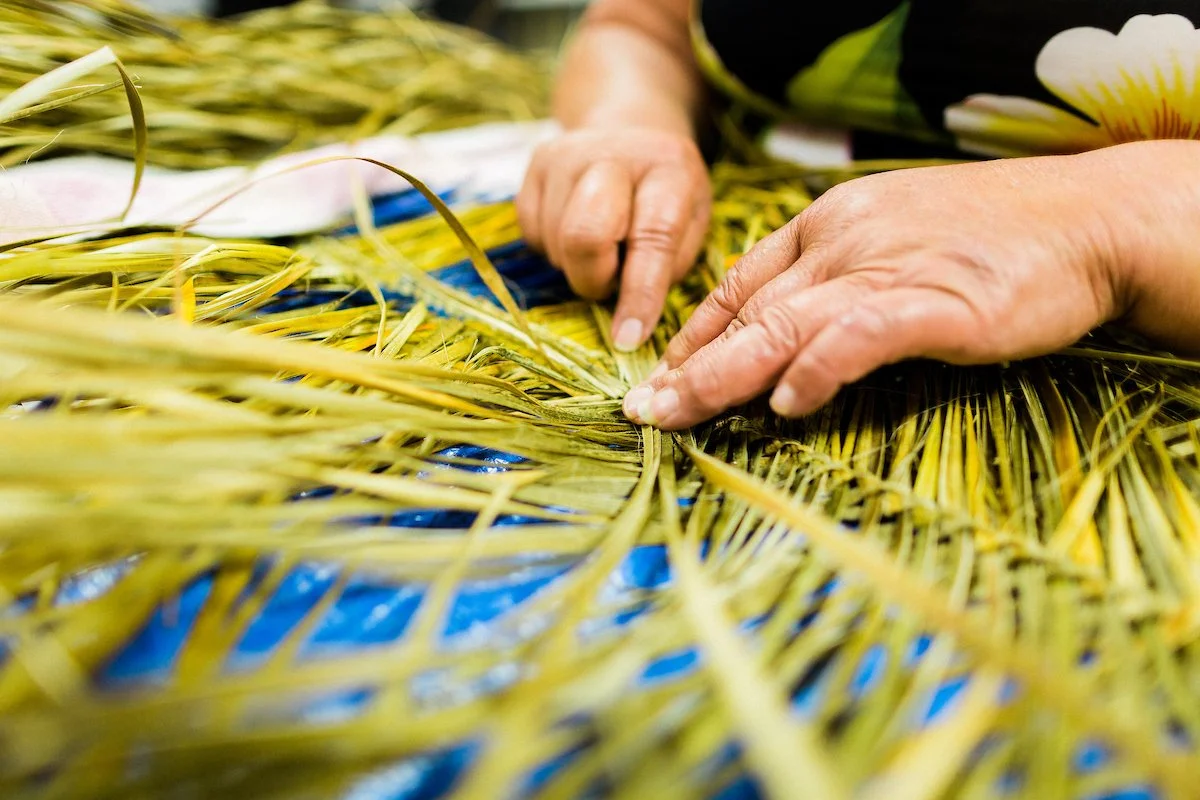
The second Indigenous Plant Fibres Symposium was recently held at Te Puia, with Te Wānanga o Aotearoa kaimahi providing the opening keynote address.
In 2021, three Te Wānanga o Aotearoa (TWoA) kaimahi completed what is believed to be the world’s first collaborative PhD through Auckland University of Technology. As part of the symposium, Dr Gloria Taituha, Dr Jacqueline McRae-Tarei, and Dr Rose Te Ratana presented a summary of their research to participants. Their research covered the historical pre-European use of raranga prior to 1860, the industrial use of raranga from 1860 to 1970, and contemporary raranga from 1970 to the present day.
The premise of the symposium is to bring together a wide range of people from the fibres industry to explore various current and potential uses of plant fibres, including but not limited to harakeke.
For TWoA, kaimahi and kaiako travelled from across the Bay of Plenty to attend. The symposium provided valuable insights into both traditional and emerging uses of our indigenous plants — from innovations such as alternatives to fibreglass, to environmental restoration initiatives like pā harakeke and wetland planting.
Jacqueline, who now holds the role of Tākiwa Ako Manager for the Whakatāne and Kawerau campuses, said, “It was an honour to be part of a kaupapa that brought together such a diverse and knowledgeable collective of kaitiaki, researchers, iwi and hapū representatives, practitioners, and industry leaders.” She added that “the presentations and discussions highlighted the importance of working collaboratively to strengthen cultural, environmental, social, and economic outcomes for our communities and future generations.”
At TWoA we are grateful to the newly formed Bioeconomy Science Institute – Maiangi Taiao (formerly known as Scion) – for its vision and commitment in convening this kaupapa, and for creating opportunities for meaningful engagement across sectors. The symposium reinforced the significance of Indigenous knowledge systems and the important role they play in shaping sustainable futures for Aotearoa.
Jodie Mason - Dr Morehu McDonald Residency Recipient
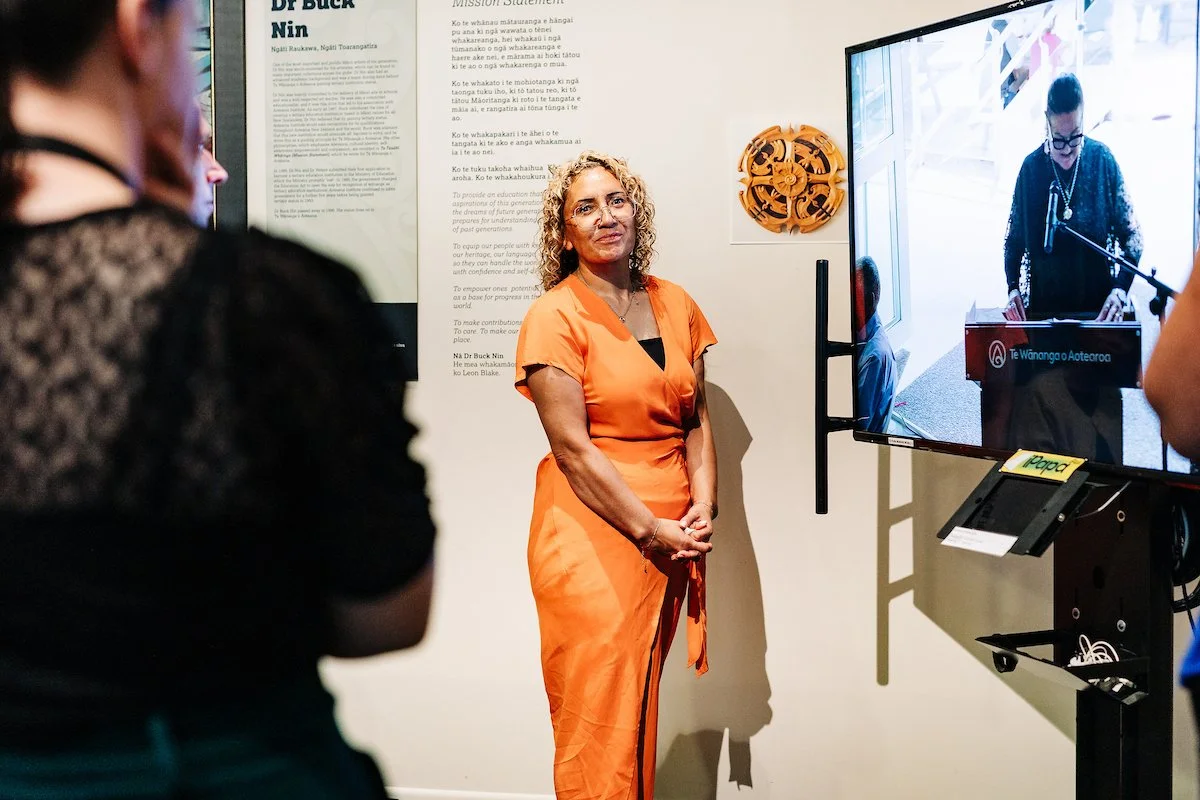
Ko wai koe? Can you introduce yourself and where you're from?
Ko Jodie Ngahuia Mason ahau. Ko Ngarangi Bird/Smith tōku māmā. Ko Mark Karihi Smith tōku pāpā.
Raised and educated in Murupara, I am deeply thankful for my whakapapa hononga to Ngāti Manawa, Te Ātihaunui-a-Pāpārangi, Ngāti Whare, Ngāti Haka-Patuheuheu, Ngāti Tahu-Ngāti Whaoa, Tūhourangi Ngāti Wāhiao, Ngāi Tahu and Ngāti Maniapoto. My upbringing was grounded in whānau, tikanga, service and a deep respect for the people and places that shaped me. Growing up on my ancestral homelands of Murupara and Whanganui gifted me a strong sense of identity, belonging and whakapono that continues to guide and nurture me today.
Professionally, I have worked across education, social work and now quality assurance within tertiary education. I am currently an Analyst - Quality Review at Te Wānanga o Aotearoa. Prior to this, I spent many years as a kaiako, leader and advocate for tauira, whānau and hāpori.
At the heart of all my mahi is a commitment to people. Whether as a social worker, teacher, researcher or analyst, I am passionate about creating spaces where Māori, and indeed all people, can thrive and where systems genuinely reflect and uphold kaupapa values, aspirations and ways of being.
What attracted you to apply for Te Manawahoukura Residency?
I feel incredibly humbled and privileged to have been selected as the recipient of the Dr Morehu McDonald Residency. To be associated with a legacy that has contributed so much to Māori advancement, education, and the nurturing of future generations is a profound honour. I carry this opportunity with deep gratitude and acknowledge those who have gone before me, creating pathways so that researchers such as myself may continue to learn, contribute, and serve our communities.
Te Manawahoukura Residency represented a unique opportunity to pause, reflect and dedicate focused time to a kaupapa that sits deeply within the layers of my heart.
As someone working within quality assurance and educational systems, I have often reflected on how kaupapa Māori values such as whanaungatanga and kaitiakitanga can be more authentically embedded within the structures that influence and enhance tauira experiences and outcomes.
The residency provides a rare opportunity to explore these questions through rangahau while being supported by a community of researchers and practitioners who are equally committed to transformative outcomes for our people and communities. It felt like an opportunity not only to grow as a researcher, but also to contribute to a wider conversation about what quality can look like, and fee like, when grounded in kaupapa Māori values.
In what ways (if any) do you hope to grow during your residency? What skills or knowledge are you hoping to develop?
I hope to further grow as a kaupapa Māori researcher and strengthen my confidence, capability and understanding of Indigenous and Māori research approaches.
I am particularly interested in developing my research design, qualitative inquiry, analysis and academic writing skills, while also deepening my understanding of how kaupapa Māori methodologies can be applied within contemporary educational and organisational contexts.
More importantly, I hope to grow in my ability to navigate the space between systems and people, understanding how rangahau can help bridge institutional frameworks with the lived experiences, aspirations and realities of tauira, whānau and hāpori.
How (if so) do you hope to give back through this residency?
This residency is not something I see as being solely for me.
I will give back by sharing the learnings, insights and reflections that emerge from the rangahau in ways that are meaningful and accessible to the people and communities who contribute to it.
I am committed to ensuring this mahi supports kaimahi, educational leaders, organisations and entities to think differently about quality, success and transformation through a kaupapa Māori lens. Ultimately, I hope the research contributes to strengthening systems that better serve our tauira, whānau, hapū and iwi.
What impact do you want to make in the future?
I hope to contribute to educational systems and environments where Māori values, knowledge and aspirations are not treated as an addition to existing frameworks, but are recognised as central to how success, quality and wellbeing are understood.
I want to help create spaces where tauira feel seen, valued and connected to who they are, and where educational success is measured not only by achievement, but also by identity, belonging, wellbeing and meaningful relationships.
My aspiration is to contribute to lasting, intergenerational change that strengthens outcomes for our people while upholding the mana of those we serve.
What dreams or aspirations are you currently working towards?
I am currently working towards becoming a stronger researcher and continuing my lifelong journey of learning and serving.
I aspire to further contribute to kaupapa Māori research, complete postgraduate and doctoral study in the future, and continue advocating for approaches that support whānau transformation through education.
Alongside these professional aspirations, I remain deeply committed to my whānau, hapū and iwi, my continual reo Māori journey, serving and adding value and creating pathways for future generations to thrive, lead and succeed as Māori.
He aha ō kupu whakakapi?
Ka nui hoki taku mihi ki a Te Wānanga o Aotearoa me te rōpū whakahaere o Te Manawahoukura mō tēnei whai wāhitanga whakahirahira. He tino hōnore tēnei ki ahau kia noho hei kaiwhiwhi mō te Dr Morehu McDonald Residency. Ka kawea e au tēnei whai wāhitanga me te ngākau whakaiti, te ngākau māhaki, me te ū ki te kaupapa kia whai hua ai mō ngā whānau, ngā hapū, ngā iwi me ngā hapori e mahi ngātahi nei tātou.
So deeply humbled and grateful to be part of Te Manawahoukura Residency and to stand alongside others who are committed to advancing kaupapa Māori research and aspirations. This opportunity represents more than personal growth; it is also a responsibility to contribute meaningfully to our people, our communities and future generations. Ko te tūmanako, mā tēnei whai wāhitanga ka taea e au te whakahoki atu i ngā hua o tēnei rangahau ki ngā whānau, hapū, iwi me ngā hapori nā rātou ahau i whakatipu, i whakakaha, i whakaaweawe hoki.
E kore e mimiti ngā mihi ki te hunga kua tautoko, kua whakapono, kua hāpai hoki i ahau i tēnei haerenga.
Mā te huruhuru ka rere te manu. Nā reira, tēnā koutou, tēnā koutou, tēnā tātou katoa.
Keith Edwards - Te Manawahoukura Residency Recipient
Ko wai ahau?
Ko Keith Edwards tōku ingoa. He uri nō Niue me Amerika Samoa, heoi, i whānau mai ahau i Aotearoa. E tipu ake ki te rohe o Tainui, a, Ngāti Maahanga, te wāhi kua whakatipu i taku aroha ki te tangata, ki te mātauranga, me te mana o te ako.
My journey at Te Wānanga o Aotearoa started as a Kaiako for the He Korowai Akonga/Bachelor of Teaching degree, but I have also had roles as a Kaiako Matua, a Kairuruku for the Ako Wānanga team, a MED, a Team Lead for Mātātahi Mataora, a Pou Tīkanga Advisor, and now serve as Specialist: Leadership and Kaimahi Development. While I am also a Doctor of Professional Practice candidate, I have always considered myself a practitioner first and a researcher second. My research has grown naturally from the people I have worked alongside, the stories I have been privileged to hear, and the questions that have emerged through practice.
Throughout my career I have been passionate about Indigenous education, culturally grounded approaches to assessment, storytelling as a way of creating and sharing knowledge, and learning that transforms not only what we know, but who we become. I am a lifelong learner, a proud whānau man, and someone who believes that education should strengthen identity, nurture potential, and honour the lived experiences that every learner brings with them.
What attracted me to apply for the Te Manawahoukura Residency?
This Residency represents a unique opportunity to step away from the day-to-day demands of mahi and dedicate uninterrupted time to a kaupapa that has been growing throughout my professional life. As someone who works closely with kaimahi, leaders and learners, many of the questions that shape my research have emerged from practice rather than from theory alone.
For many years I have been asking a simple but deeply important question: Is there such a thing as Māori assessment? That question has become the foundation of my doctoral research and the ongoing development of an assessment framework I call Whare Aromatawai - an Indigenous framework that seeks to reimagine assessment through the values, narratives and lived experiences of our people.
In what ways do I hope to grow during my residency?
More than anything, I hope this experience helps me move from thinking, "I hope this work has value," to knowing that it does. Not because it is my work alone, but because it has grown through years of practice, the wisdom generously shared by others, and the collective aspirations of Indigenous communities seeking educational approaches that better reflect who we are.
What skills or knowledge am I hoping to develop?
One of the greatest opportunities this residency offers is the chance to deepen both my practical and scholarly understanding of Indigenous education. While I hope to strengthen my knowledge of Kaupapa Māori research methodologies, practice-led research and doctoral-level writing, I am equally interested in developing approaches that connect research directly to practice.
How do you hope to give back through this residency?
For me, the purpose of research has always been to serve people rather than to simply produce knowledge. I hope the work undertaken during this residency will contribute to the ongoing development of kaiako, facilitators and educational leaders by providing culturally responsive approaches to assessment that recognise the strengths that learners already bring with them.
If the knowledge developed during this residency can contribute to richer educational conversations, encourage new thinking about assessment, or support even one kaiako to see their learners differently, then I will consider the residency a success, because giving back is not something that happens after the research is complete—it is part of the research itself.
What impact do I want to make in the future?
Through the ongoing development of the Whare Aromatawai, I hope to contribute to assessment approaches that recognise strengths rather than deficits, celebrate identity alongside achievement, and create opportunities for learners to demonstrate success in ways that are culturally meaningful.
More broadly, I hope to contribute to the ongoing transformation of Indigenous education by encouraging conversations that challenge conventional thinking while remaining grounded in our own values and traditions.
While my immediate focus is Aotearoa, I also hope the ideas developed through this research may resonate with Indigenous communities more widely, contributing to international conversations about culturally grounded educational practice.
What dreams or aspirations am I currently working towards?
I am currently working towards completing my Doctor of Professional Practice while continuing to develop the Whare Aromatawai as both a practical educational framework and a contribution to Indigenous scholarship.
Looking ahead, I would welcome opportunities to share and adapt this work alongside other Indigenous communities beyond Aotearoa, learning from one another as we collectively reimagine educational futures.
Above all, I hope to contribute to an educational landscape where learners are measured not only by what they can reproduce in a test, but by who they become through learning.
Ngā kupu whakakapi
He uri ahau nō ngā tūpuna i whakawhiti i Te Moana-nui-a-Kiwa mā te māia, mā te whakapono, mā te mātauranga. Ko tēnei nohonga rangahau he wāhi anō i roto i taua haerenga.
E mihi ana ahau ki Te Manawahoukura mō tēnei whai wāhitanga. He taonga tēnei nohonga rangahau, ehara i te mea mō taku ake whakawhanaketanga anake, engari mō te kaupapa nui ake e whai ana ki te tautoko i ngā kaiako, ngā tauira me ngā hapori Māori me ngā iwi taketake.
This residency is not simply an opportunity for personal growth. It is an opportunity to contribute to a wider conversation about Indigenous education, assessment, and the many ways we recognise learning. I feel deeply honoured by this opportunity and look forward to contributing to the journey ahead.
Mā te ako, ka tipu te mātauranga.
Mā te mātauranga, ka puāwai te tāngata.
Mā te tāngata, ka puāwai te ao.
Manawatina+: Reclaiming Narratives, Reconnecting Values
Te Manawahoukura’s Manawatina+ blog offers a powerful platform for whakaaro Māori to be shared, challenged, and reimagined. Through contributions from researchers, leaders, and practitioners, the blog creates space for deep reflection on identity, values, and cultural frameworks.
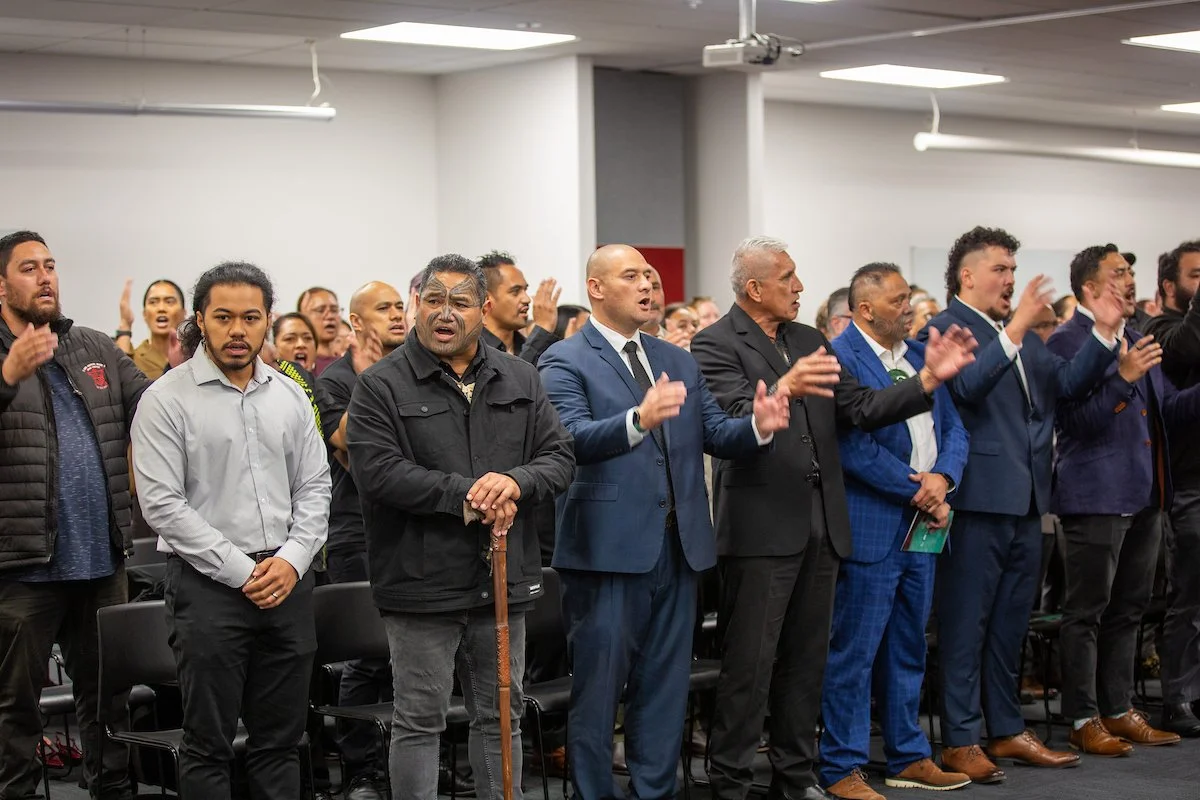
One of the blog entries that Manawatina+explores is Ngā Uara in action. Reflections from Dr Benita Simati-Kumar and Dr Hirini Kaa on a recent pōwhiri marking a significant partnership demonstrate how values such as Kotahitanga and Te Whakapono are not simply theoretical concepts, but lived, embodied experiences.
Through the lens of the pōwhiri, Kotahitanga is seen in its purest form — a collective unity where roles dissolve and individuals stand as one, guided by shared intent and tikanga. Similarly, Te Whakapono emerges as an active, relational force grounded in trust, obligation, and the ongoing responsibility to nurture connections beyond the ceremonial moment.
This blending of personal narrative, critical reflection, and cultural analysis is what makes Manawatina+ a valuable space for Te Manawahoukura.
As Te Manawahoukura continues to develop this platform, Manawatina+ stands as an invitation: to reflect deeply, to engage courageously, and to contribute to the ongoing renewal of our collective knowledge and ways of being.