Kia hono mai ki te kaupapa
— Discover what’s happening across our Rangahau kaupapa.
He Pānui Rangahau | October 2026
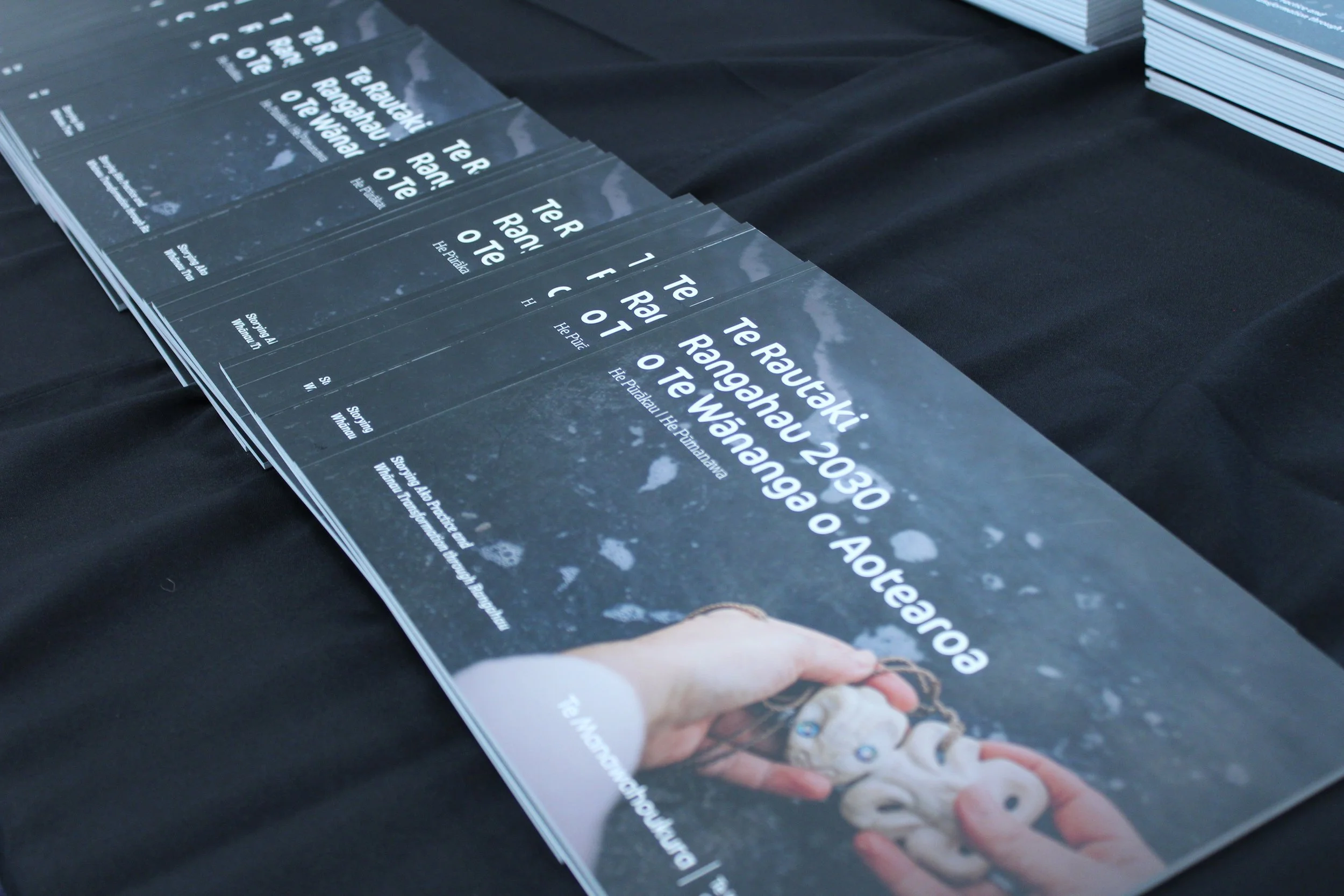
Launching Te Rautaki Rangahau 2030
Our longstanding stalwart of the Kaupapa, Aukaha Hāpai Ō Dr Shelley Hoani told the story of the foundation of rangahau within Te Wānanga o Aotearoa from the early 2000’s until current day.
Leading the launch was our Paemanu, Dr Joni Angeli-Gordon, who shared the vision and intent behind the strategy. Dr Angeli-Gordon highlighted the importance of ensuring that rangahau remains relevant, collaborative, and responsive to the needs of the communities we serve.
Throughout the launch, there was a strong sense of optimism and shared purpose. The strategy recognises the breadth of expertise that exists across our research teams and the wider organisation and seeks to bring that expertise together in ways that amplify impact. It also reinforces the importance of nurturing emerging researchers, fostering partnerships, and ensuring that mātauranga-informed approaches remain at the heart of our mahi.
For our kaimahi in attendance, the launch provided an opportunity to connect our own portfolios and workstreams to the rautaki.
The launch of Te Rautaki Rangahau marks the beginning of an exciting new chapter, one grounded in aspiration, and a shared commitment to fostering matauranga that supports flourishing for our people and communities.
He Ara Rangahau: A Journey of Discovery, Identity and Purpose
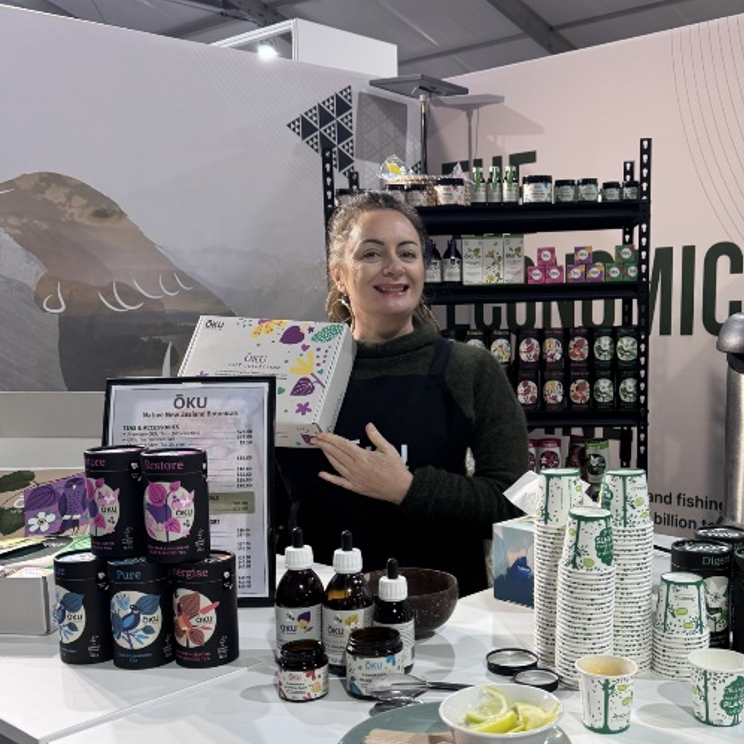
For Helen Paul-Smith, rangahau has never been confined to books, laboratories, or formal study. It is a lifelong journey of curiosity, connection, and learning that has shaped both her personal life and professional path.
Raised beneath the shadow of Tongariro, Ngāuruhoe and Ruapehu, Helen’s childhood was deeply connected to the natural world. Surrounded by native forests, rivers, and mountains, she developed an early appreciation for the environment that would later influence her life’s work. Yet it was not until adulthood that she began consciously engaging in rangahau, seeking deeper knowledge about wellbeing, healing, culture, and identity.
Her journey took her overseas, where studying yoga and Ayurvedic medicine introduced her to ancient healing traditions. These experiences sparked questions that became the foundation of future rangahau: why were people looking overseas for healing solutions when Aotearoa held its own rich traditions and taonga species? Together with her husband, Helen began exploring the medicinal potential of native plants, learning from experts, mentors, whānau and the environment itself. What started as curiosity became the foundation of ŌKU, a business grounded in sustainability, culture, and community.
Helen’s rangahau expanded further through her studies at Te Wānanga o Aotearoa. While she initially pursued social work as a career at our Tukarere Campus, the experience became much more than a qualification. It was a transformative period of reconnecting with her whakapapa, te ao Māori, tikanga, and whānau. Through learning alongside others, spending time on marae, and engaging with Māori ways of knowing, she developed a deeper understanding of who she was and how culture could guide her work and decision-making.
Today, Helen sees rangahau as a continual process rather than a destination. Whether investigating native plants, learning about sustainable harvesting, exploring packaging solutions, or engaging with emerging technologies such as artificial intelligence, she believes growth comes from remaining open to learning. Her work with research organisations to explore the properties of taonga species reflects a commitment to blending mātauranga Māori with contemporary science, demonstrating how traditional knowledge and modern research can strengthen one another.
At its heart, Helen’s story shows that rangahau is about more than gathering information. It is about seeking understanding, building connections, and creating positive outcomes for people, culture, community, and the environment. Through every stage of her journey, rangahau has helped shape not only a successful business but also a stronger sense of identity, purpose, and belonging.
Te Wānanga o Aotearoa Showcases Eleven Voices at International Indigenous Research Conference (IIRC 2026)
Te Wānanga o Aotearoa researchers, leaders and practitioners will share their expertise at this year’s International Indigenous Research Conference (IIRC), highlighting the strength of Indigenous-led research across Aotearoa.
Represented by 11 presenters, Te Wānanga o Aotearoa will contribute perspectives spanning mātauranga Māori, education, wellbeing, leadership and community development. Their presentations reflect a commitment to rangahau that is grounded in the aspirations of whānau, hapū and iwi.
The IIRC provides an important platform for Indigenous researchers and practitioners to exchange knowledge, explore innovative approaches and share solutions that create positive change. Through their presentations, our representatives will showcase research and practice that supports Indigenous wellbeing and collective flourishing.
Here are the 11 presenters who will proudly represent Te Wānanga o Aotearoa on the international stage:
Heidi Symon
Presentation Title: Takipu Marae Matauranga Oranga: Navigating Relocation and Rebuilding after Cyclone Gabrielle
Tūranga:
Project Manager, Te Manawahoukura
Site:
Waiwhero
Celia Porter and Talaleu Joel
Presentation Title: Kei Tua o te Pae: Manaaki Tāngata Transformative Impact of Kaupapa Māori Social Services Education
Tūranga:
Kaiako Manaaki Tangata (Both of them)
Site:
Māngere
Keith Edwards
Presentation Title: Whare Aromatawai: Reclaiming Indigenous Assessment Through Ancestral Intelligence
Tūranga:
Kaihāpai Rangahau Matua Te Manawahoukura (Seconded)
Site:
Te Puna Manaaki
Alex Maddox
Presentation Title: Beyond Deficit: Reimagining Disability Support through an Indigenous Lens
Tūranga: Kaiwhakarite Matua Bachelor of Bicultural Social Work
Site:
Māngere
Jodie Mason
Presentation Title: From Compliance to Kaupapa: Reimagining Indigenous Quality as Relational Practice in Aotearoa Education.
Tūranga: Analyst- Quality Review
Site:
Te Puna Manaaki
Desna Whaanga Schollum
Presentation Title: Operationalising 'Te Kete Matatika' a toolkit for values-based and ethical governance and adaptation
Tūranga: Kaiako Maunga Kura Toi
Site: Heretaunga
Jazz Heyder
Presentation Title: Hinetītama Kaiwhakarito Tikanga: A Tikanga-Centred Framework for Human Resources and Employment Relations Practices in Aotearoa Workplaces
Tūranga: Portfolio Manager-Kiriwhanake
Site: Waiwhero
Helen Tau’au Filisi
Presentation Title: Safeguarding Measina a Samoa: Creative Practice for Indigenous Futures in the Samoan Diaspora Akorau - Culturally grounded Digital Education Systems and Practices from a Māori World View
Tūranga: Kaiako Kaitiakitanga
Site: Māngere
Bradleigh Uruamo
Presentation Title: Akorau - Culturally grounded Digital Education Systems and Practices from a Māori World View
Tūranga: Graphic & Digital Designer
Site: Te Puna Manaaki
Hiraani Winikeri
Presentation Title: Akorau - Culturally grounded Digital Education Systems and Practices from a Māori World View
Tūranga: Team Lead National Tauira Services
Site: Hokowhitu
Kia kaha rā e te whānau. We wish you every success as you represent Te Wānanga o Aotearoa on the international stage.
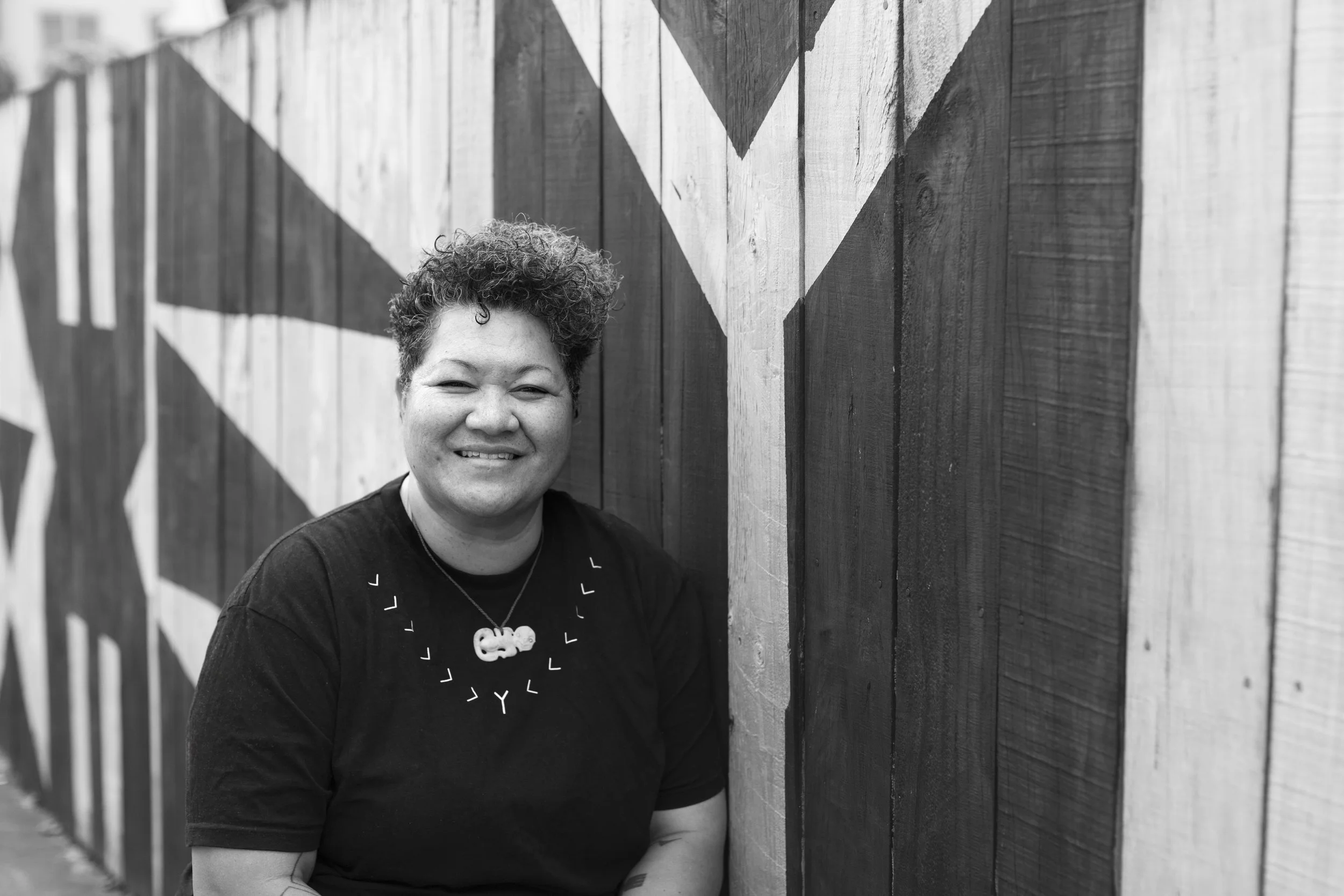
Creative Practice as Indigenous Research: Margaret Aull Shares insights to collective revitalisation
For Margaret Aull (Te Rarawa, Tūwharetoa, Fiji) research is not confined to universities, journals, or doctoral programmes. It can also emerge through creative practice, community collaboration, and the revitalisation of Indigenous knowledge systems. That is the message she shared as an invited speaker at the recent gathering of Māori and Pacific Fellows hosted by Royal Society Te Apārangi.
Margaret was invited to contribute a perspective often underrepresented in traditional research spaces: the role of creative practice in generating, preserving, and revitalising Indigenous knowledge.
Central to her presentation is The Veiqia Project, a decade-long initiative dedicated to researching and revitalising traditional Fijian tattooing practices that were heavily impacted by colonisation. The project brings together a collective of Fijian researchers, artists, practitioners and community members across Aotearoa, Australia, Fiji and the United States, working towards reconnecting Fijian communities with an important part of their cultural heritage.
Veiqia is specifically a woman to woman tattooing practise. Through colonisation, missionary influence and changing social attitudes, much of this knowledge was suppressed and gradually disappeared from public consciousness. Aull explains that the loss of the practice also contributed to the loss of associated stories, rituals, cultural objects and intergenerational knowledge.
Over the past ten years, The Veiqia Project has worked to reverse that process through exhibitions, workshops, community engagement, museum partnerships and educational resources. The project has collaborated with organisations including the Fiji Museum, universities, cultural institutions and funding bodies to document and share knowledge while ensuring it remains accessible to the communities it belongs to.
Aull believes one of the project’s greatest strengths is its collective approach.
“There is a lot of strength in rebuilding memory together and remapping story back into our skin and lives – We have a website and actively contribute to written material or forums - so that our Indigenous histories and unique practices are not marginalised again. We have been very clear that the research we have done - isn’t ours it belongs to Fiji. It is part of the wider Indigenous revitalisation movement taking place across the Pacific. “
This philosophy places community benefit at the centre of the work. Rather than viewing research as something extracted from communities, the project focuses on returning knowledge, restoring cultural memory and creating pathways for future generations.
In 2025, The Veiqia Project was recognised with a Creative New Zealand Pacific Heritage Arts Award, acknowledging both its cultural significance and its contribution to Indigenous knowledge revitalisation. More recently, members of the project have begun reintroducing traditional tattooing practices, marking an important milestone in making the knowledge a living practice once again.
For Aull, the invitation from Royal Society Te Apārangi was an opportunity to demonstrate that research can take many forms. Whether through academic inquiry or creative practice, the goal remains the same: strengthening communities, restoring knowledge systems, and ensuring cultural traditions continue to thrive for future generations.
Margaret is a Programme Developer based at Te Puna Manaaki.
My Ancestors Are Always With Me: Celebrating the Legacy of Robyn Kahukiwa
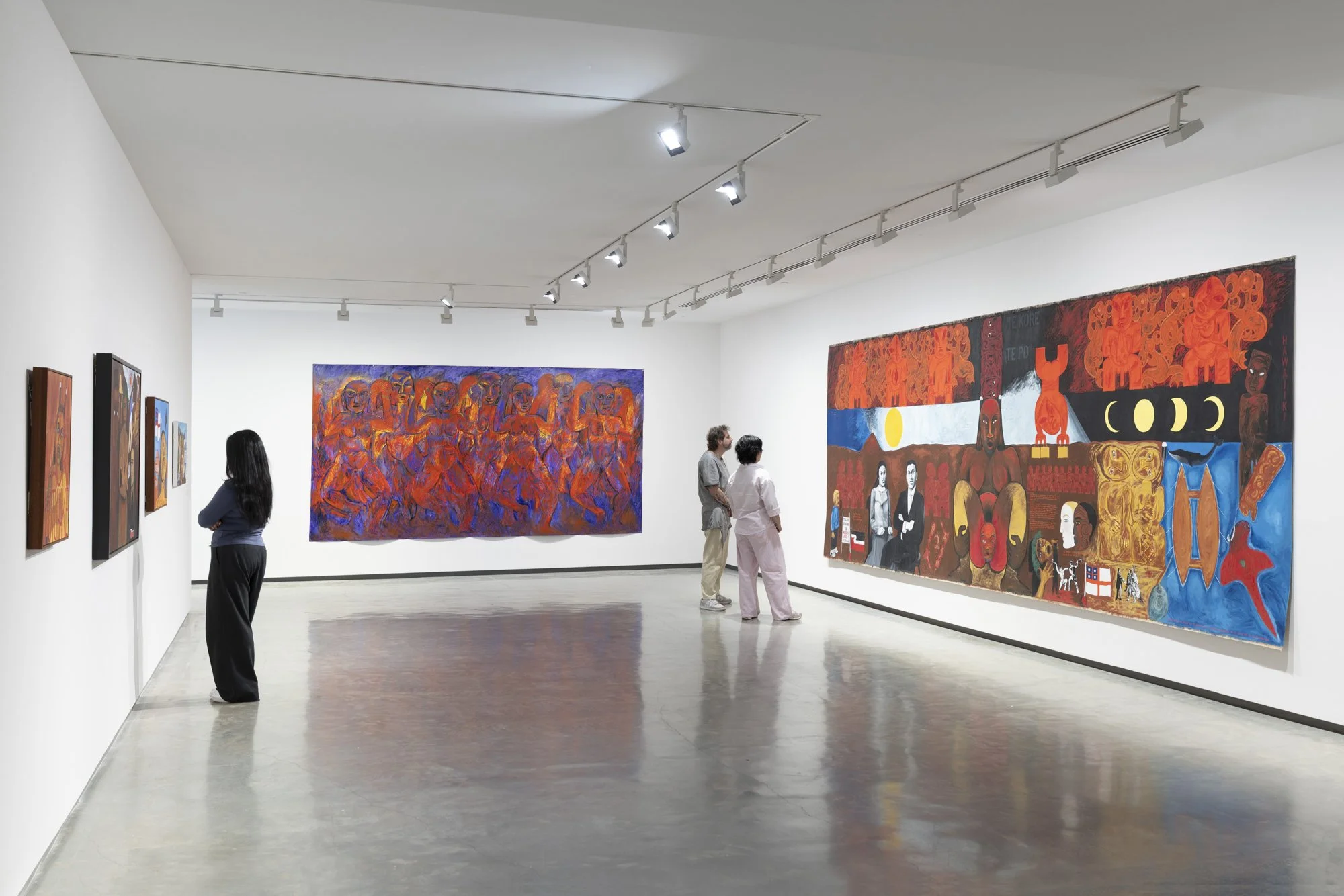
Curator, writer, researcher and Tiaki Tāonga Kaiako ki Tukarere, Matariki Williams recently travelled to Sydney as co-curator of a major retrospective exhibition at the Museum of Contemporary Art honouring renowned Māori artist Robyn Kahukiwa. Titled My Ancestors Are Always With Me, the exhibition celebrates the life, work and enduring influence of one of Aotearoa’s most prolific and significant Māori artists.
The exhibition has been nearly two years in the making and was originally initiated by Kahukiwa herself before her passing in early 2025. Working alongside the Pouarataki Curator Māori of Christchurch Art Gallery, Chloe Cull, Matariki helped bring together an exhibition that showcases the breadth of Kahukiwa’s creative legacy.
Born in Sydney in 1938 to a Māori mother, Kahukiwa moved to Aotearoa in the late 1950s where she developed a distinctive artistic style deeply rooted in whakapapa, identity and Māori storytelling. Her work explored themes of colonisation, cultural disconnection, resilience and belonging. Over time, she became widely recognised for powerful series such as Wahine Toa, which elevated the stories and presence of atua wāhine and challenged the marginalisation of wāhine Māori and atua wāhine narratives.
Williams reflected on Kahukiwa’s ability to pair critique with hope.
“Throughout her practice, she would raise an issue but also offer a solution or positive outcome.”
This commitment to empowering narratives is evident across Kahukiwa’s extensive body of work, which includes paintings, prints, children’s books and commissioned public art. During the exhibition research process, the curators along with Kahukiwa’s gallerist traced more than 600 artworks, revealing the remarkable scale of her contribution to Māori visual culture.
The Sydney opening was marked by a Welcome to Country, karakia and waiata, bringing together Māori communities living in Australia alongside distinguished guests, including former Prime Minister Dame Jacinda Ardern and members of Kahukiwa’s whānau.
For Williams, the exhibition also highlights the importance of recognising creative practice as a valuable form of rangahau. She noted that Māori artists conduct significant research through their work, creating visual records of histories, experiences and futures that may not always be captured through traditional academic outputs.
Following its Sydney season, My Ancestors Are Always With Me will travel to Christchurch Art Gallery, where it will be expanded to include additional paintings, prints, and books. The exhibition stands as both a celebration of Kahukiwa’s legacy and a reminder that our stories, ancestors and connections remain with us, wherever we may be.
Here is the link to the exhibition-https://www.mca.com.au/exhibitions/robyn-kahukiwa/
Here is also a link about an award that Matariki and the team received regarding a book that they wrote which was about Robyn Kahukiwa https://authors.org.nz/25000-tca-nzsa-writers-award-has-been-awarded-to-writer-matariki-williams/