
Kim Southey
Iwi Affiliations
Ngāti Porou, Ngāti Kuia, Ngāti Koata
Īmera: kim.southey@twoa.ac.nz
Relevant Qualifications
2020: PhD, University of Waikato
2005: PGDipPracPsych(Comm), University of Waikato
Expertise
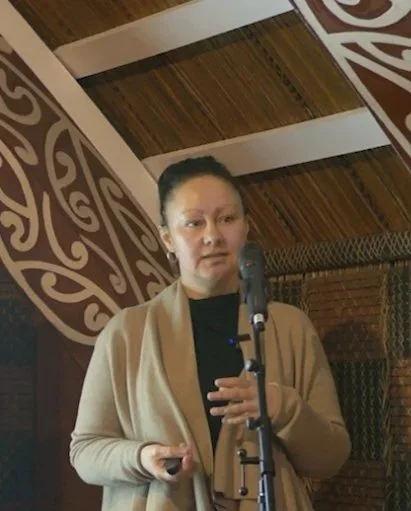
We are also pleased to welcome Dr Kim Southey (Ngāti Porou, Ngāti Kuia, Ngāti Koata) to the Rangahau team of Te Manawahoukura, based in Kirikiriroa. Kim joins us as a Ngā Pūanga Pūtaiao Fellow, bringing a kaupapa-driven research programme grounded in mātauranga Māori and community-connected practice.
Kim is a registered community psychologist with experience across government and Māori provider organisations. Her mahi has focused on advancing health equity through policy development and frontline roles grounded in Whānau Ora principles. She has led community and iwi-based research across a range of kaupapa, including child protection, sexual and reproductive health, and general health and wellbeing.
Kim completed a postdoctoral research project in partnership with Te Atawhai o te Ao (Independent Māori Institute for Environment and Health), examining health policy and Māori ontology, building on her doctoral research exploring Māori metaphysics and concepts of mental illness. She is the recipient of the University of Waikato Koko Kairangi Award for Best Doctoral Thesis (2020) and has previously taught Māori philosophy and knowledge production within the School of Education at the University of Waikato.
She is currently completing a Royal Society Te Apārangi Pūanga Pūtaiao Fellowship investigating Māori data governance for housing. Her fellowship works in partnership with a Māori hauora organisation to explore how data is collected, interpreted, and mobilised, using mātauranga Māori to inform data systems and co-create a shared database model that better aligns with holistic Māori housing aspirations and demonstrates meaningful impact for Māori communities.
Kim’s kaupapa aligns strongly with existing research strands within Te Manawahoukura, including Māori data sovereignty, and creating Māori data systems related to housing. Her research strengthens our collective capacity to interrogate how data can better serve Māori aspirations rather than reproduce extractive or deficit-based models.
Kim joins our Mangakōtukutuku-based team after transitioning from her previous role as lecturer within Te Kura Whatu Oho Mauri (School of Psychology) at the University of Waikato. We look forward to the depth and impact of her mahi and the ways her fellowship will contribute to transformative, Māori-led research practice.